
Long Term Health Habits That Last Sustainable Wellness Tips for Balanced Living

Most health plans fail for a simple reason: they are built for a finish line, not for real life.
A strict meal plan can work for a week. A burst of intense workouts can feel motivating for a month. A fresh journal, a new app, or a clean calendar can make change feel easy at first. Then work gets busy, sleep falls apart, family needs attention, travel interrupts routines, or motivation fades. The plan breaks, and many people assume they failed.
Lasting wellness works differently. It is less about dramatic change and more about building a way of living that can bend without breaking. The goal is not perfection. The goal is a steady pattern of choices that support energy, strength, mood, and health over time.
This guide focuses on long-term health habits that fit into everyday life. It covers balanced nutrition, regular movement, mental well-being, goal setting, progress tracking, and the flexible mindset that keeps healthy routines going through imperfect weeks.
This content is for general information only and is not a substitute for medical advice. Anyone managing a health condition, recovering from injury, or making major diet or exercise changes should talk with a qualified health professional.

Build health around the life you actually live
A long-term perspective changes the question.
Instead of asking, “How fast can I get results?” ask, “What can I keep doing six months from now?” That shift protects against the all-or-nothing thinking that often derails wellness goals.
A sustainable habit has three qualities:
It fits your schedule most days.
It supports your health without taking over your life.
It can survive stress, travel, holidays, and low motivation.
This does not mean every habit must feel easy. Exercise can still challenge you. Eating well can still take planning. Mental well-being may require honest effort. The difference is that sustainable habits do not depend on perfect conditions.
Choose consistency before intensity
A routine that happens three times a week for years will usually do more for health than a demanding routine that lasts three weeks.
For example, walking for 25 minutes most days may not feel impressive. Yet it supports cardiovascular health, mood, blood sugar control, and stress relief. It also creates a foundation for more activity later.
The same idea applies to food. A person who eats balanced meals most of the time does not need to follow a perfect diet. Small repeatable choices matter:
Add a protein source to breakfast.
Keep vegetables washed and ready.
Drink water before reaching for another snack.
Plan one simple dinner that can become leftovers.
Keep satisfying, nutrient-dense foods visible and easy to grab.
These choices are not flashy. That is why they work.
Design habits for your lowest-energy days
Many people plan health routines for their best-case selves. The rested, motivated, organized version of life gets the plan. Then a normal hard day shows up, and the plan is too demanding.
A better approach is to create a minimum version of each habit.
For movement, the minimum might be a 10-minute walk.
For nutrition, it might be adding one fruit or vegetable to a meal.
For mental well-being, it might be two minutes of quiet breathing before bed.
Minimum habits matter because they keep the identity alive. A short walk still says, “I am someone who moves my body.” A simple balanced meal still says, “I care for myself even when I am busy.”
That continuity builds trust. Over time, trust becomes momentum.
Make balanced nutrition simple enough to repeat
Healthy eating does not need to be rigid to be effective. In fact, overly strict food rules often backfire because they are hard to maintain socially, emotionally, and practically.
Balanced nutrition works best when it gives the body what it needs while leaving room for preference, culture, budget, and enjoyment.
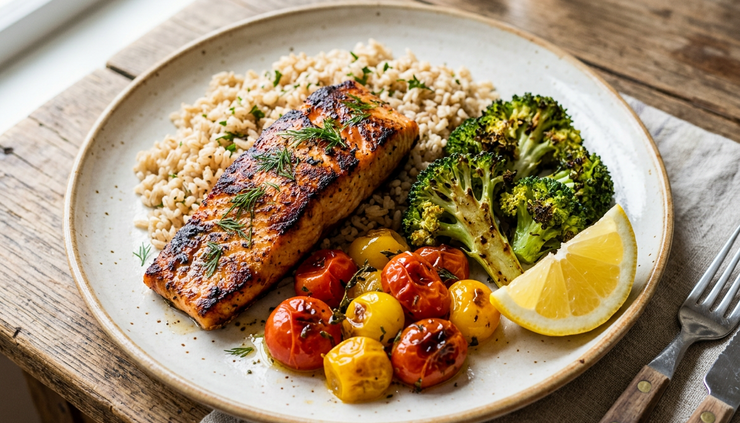
A helpful plate structure can keep meals simple:
Protein
Eggs, fish, poultry, tofu, beans, Greek yogurt, lean meats
Fiber-rich carbohydrates
Oats, potatoes, brown rice, whole grain bread, lentils, fruit
Colorful produce
Leafy greens, peppers, carrots, berries, broccoli, tomatoes
This is not a rulebook. It is a guide. Some meals will not match it perfectly, and that is fine. The point is to make balanced meals easier to assemble without tracking every bite.
Focus on what to add
Many diets begin with restriction. Cut this. Avoid that. Never eat these foods. While some people need specific limits for medical reasons, a general wellness approach often works better when it starts with addition.
Add protein to feel more satisfied.
Add fiber to support digestion and steady energy.
Add water to reduce the chance of mistaking thirst for hunger.
Add fruits and vegetables for vitamins, minerals, and variety.
Add regular meals if skipping food leads to late-day overeating.
This approach feels less punishing and more practical. It also leaves room for enjoyment. A healthy lifestyle can include birthday cake, pizza night, holiday meals, and restaurant dinners. The skill is returning to supportive patterns afterward without guilt.
Create a food environment that helps
Willpower is unreliable when life gets busy. Environment is more dependable.
A helpful food environment might include:
A visible fruit bowl on the counter.
Pre-cut vegetables in the refrigerator.
Protein options that cook quickly.
Frozen meals with balanced ingredients for busy nights.
Snacks portioned into containers.
A written list of easy meals everyone in the household accepts.
Small setup choices reduce decision fatigue. When the healthier option is also the easier option, consistency improves.
Move your body in ways you can maintain
Exercise is often treated as punishment for eating or a sprint toward a body goal. That mindset rarely lasts. Movement becomes more sustainable when it connects to daily life and personal well-being.
Regular exercise can support heart health, strength, mobility, sleep, energy, and mood. It also helps preserve independence over time. The best routine is not always the hardest one. It is the one that gets done and can gradually grow.
Combine cardio, strength, and mobility
A balanced movement routine usually includes three types of activity.
Cardio movement supports endurance and heart health. Walking, cycling, swimming, dancing, hiking, and jogging all count.
Strength training helps maintain muscle and bone strength. This can include bodyweight exercises, resistance bands, dumbbells, machines, or everyday movements like carrying groceries and climbing stairs.
Mobility and flexibility work supports range of motion and comfort. Gentle stretching, yoga, dynamic warmups, and joint mobility drills can help the body feel more capable.
A simple weekly rhythm might look like this:
Day | Movement idea |
Monday | 30-minute walk |
Tuesday | 20-minute strength session |
Wednesday | Rest or gentle stretching |
Thursday | 30-minute bike ride or walk |
Friday | 20-minute strength session |
Saturday | Hike, dance class, sport, or longer walk |
Sunday | Rest, mobility, or light movement |
This schedule is only an example. The right plan depends on fitness level, health status, access, preferences, and time.
Use the two-minute start
Starting is often harder than continuing. The two-minute start lowers the barrier.
Put on your shoes and walk outside for two minutes.
Do one set of bodyweight squats.
Stretch while coffee brews.
Turn on one song and move until it ends.
Once the body starts, doing more often feels easier. If not, the two-minute version still counts. The goal is to reduce the drama around exercise and make motion normal.
Let enjoyment matter
Enjoyment is not a bonus. It is a major part of sustainability.
Some people love gyms. Others prefer trails, home workouts, community classes, sports, or walking with a friend. The body does not require one perfect format. It responds to repeated movement.
A practical question can help: “What kind of movement would I be willing to do even when I am not highly motivated?”
The answer is often the best place to begin.
Protect mental well-being as part of health
Wellness is not only food and fitness. Mental well-being shapes sleep, motivation, relationships, stress levels, and the ability to follow through.
A long-term health plan that ignores stress will eventually run into trouble. People do not make choices in a vacuum. They make choices while tired, worried, overstimulated, lonely, or overwhelmed.
Supporting mental well-being does not always require a major life overhaul. It often starts with repeatable recovery habits.
Build daily recovery into the routine
Recovery habits help the nervous system settle. They create space between demands.
Useful options include:
Taking a walk without headphones.
Writing down thoughts before bed.
Practicing slow breathing for a few minutes.
Spending time outside in natural light.
Setting a consistent wind-down routine.
Talking with a trusted friend.
Taking short breaks during long work periods.
Sleep deserves special attention. Poor sleep can affect hunger cues, mood, patience, focus, and energy for movement. While sleep needs vary, a steady bedtime routine, less late caffeine, reduced screen time before bed, and a cool, dark room can support better rest.
Reduce stress with boundaries
Healthy habits need space. Without boundaries, the day fills up before wellness has a chance.
Boundaries might look like leaving one evening unscheduled, declining extra commitments, setting a cutoff time for work, or protecting a lunch break. These choices can feel uncomfortable at first, especially for people used to overextending themselves.
Yet long-term well-being requires recovery. Rest is not a reward for burnout. It is part of the system that makes consistency possible.

Set goals that guide without controlling your life
Goals help turn good intentions into clear action. They give direction and make progress easier to notice. The key is to set goals that support consistent behavior rather than create pressure to be perfect.
A strong wellness goal includes both an outcome and a process.
An outcome is the result someone hopes for, such as improved energy, better endurance, healthier lab markers, more strength, or a more stable mood.
A process is the repeatable action that can lead there, such as walking four days a week, eating a protein-rich breakfast, going to bed at a steady time, or practicing stress relief after work.
Outcome goals can inspire. Process goals create the path.
Make goals specific and forgiving
A vague goal like “eat healthier” is hard to follow. A specific goal works better.
For example:
Eat a vegetable with lunch four days this week.
Walk for 20 minutes on Monday, Wednesday, and Saturday.
Prepare two easy dinners before the week begins.
Do a 10-minute stretch routine before bed three nights this week.
Drink a glass of water after waking up.
Forgiving goals include room for life. Instead of “work out every day,” a better goal might be “move my body at least four days this week.” That way, one missed day does not ruin the plan.
Track progress without turning it into judgment
Tracking helps reveal patterns. It also shows progress that may not be obvious day to day.
Useful things to track include:
Workouts completed.
Average daily steps.
Servings of fruits and vegetables.
Water intake.
Sleep routines.
Mood or stress level.
Energy during the day.
Strength improvements.
How clothes feel.
Resting habits, such as breaks and bedtime consistency.
Tracking should inform, not shame. If the data shows a habit is not happening, that is feedback. Maybe the goal is too big. Maybe the timing is wrong. Maybe the environment needs to change.
A missed habit is not a character flaw. It is a signal to adjust.
Sustainable wellness is built through repeated course corrections, not flawless execution.
A weekly check-in can keep things simple. Ask three questions:
What went well this week?
What got in the way?
What is one small adjustment for next week?
This keeps progress grounded in real life.

Stay patient and flexible when life changes
Patience is one of the most underrated health skills. The body changes slowly. Habits become automatic through repetition. Confidence grows after many small promises kept.
Fast results can be motivating, but they can also encourage extreme methods. Long-term wellness asks for a different kind of motivation. It invites people to care about how they feel next week, next season, and next year.
Expect setbacks before they happen
Setbacks are part of every health journey. Illness, travel, stress, injuries, celebrations, grief, schedule changes, and simple boredom can interrupt routines.
Planning for setbacks makes them less disruptive.
A flexible plan might include:
A travel workout that requires no equipment.
A short grocery list for busy weeks.
A few shelf-stable meal options.
A lower-intensity exercise choice for tired days.
A plan to restart after missed time.
A reminder that one meal, one day, or one week does not erase progress.
The restart matters more than the interruption.
Practice the next best choice
All-or-nothing thinking says, “I already missed the workout, so the day is ruined.” A flexible mindset says, “What is the next helpful choice?”
That choice might be taking a short walk after dinner, drinking water, preparing tomorrow’s breakfast, stretching for five minutes, or going to bed on time.
This approach removes the need to wait for Monday, next month, or a perfect new routine. Progress can restart at the next meal, the next break, or the next breath.
Let identity lead the habit
Lasting change becomes easier when habits connect to identity.
Someone might shift from “I am trying to exercise” to “I am a person who takes care of my body.”
From “I should eat better” to “I build meals that help me feel steady and strong.”
From “I need to manage stress” to “I make space to recover.”
Identity does not require perfection. It grows through repetition. Every small choice becomes evidence.

A lasting healthy lifestyle is built one repeatable choice at a time
Sustainable wellness is not a single plan, challenge, reset, or burst of discipline. It is a relationship with daily choices that can grow, pause, adapt, and continue.
Balanced nutrition supports energy and health without requiring food perfection. Regular movement builds strength and resilience when it fits real life. Mental well-being practices create the recovery needed to keep going. Clear goals and simple tracking turn progress into something visible. Patience and flexibility keep one hard week from becoming a full stop.
Start small enough that success feels possible. Choose one habit that supports the life you want, then practice it this week. Once it feels steady, add another.
The most powerful health routine is the one that stays with you.


Comments